Can Engineering Students Help Solve Nigeria’s Everyday Problems? Innovation Starts on Campus
Introduction: What If the Solution Is Already in Your Classroom?
Imagine waking up one morning to discover that there is no electricity, your water supply is unavailable, and transportation to school is becoming increasingly difficult. These are familiar experiences for many Nigerians. While they may appear to be ordinary challenges, they represent opportunities for engineering innovation.
Now consider this: what if the next solution to one of these problems came from an engineering student at OAUSTECH?
Engineering is more than equations, laboratory experiments, technical drawings, and examinations. At its core, engineering is about identifying problems and developing practical solutions that improve everyday life.
Yet, many students spend years studying engineering principles without exploring how those principles can be applied outside the classroom.
With the increasing availability of affordable technology, online learning resources, and practical development tools, engineering students have more opportunities than ever to experiment, innovate, and create useful solutions.
The question is no longer whether students can innovate. It is whether they are willing to start.
1. Electricity Challenges: Can Students Develop Affordable Energy Solutions?
Electricity remains one of the major challenges affecting households, businesses, and educational institutions in Nigeria.
Although large-scale power generation requires substantial investment, students can explore smaller solutions that address specific energy needs.
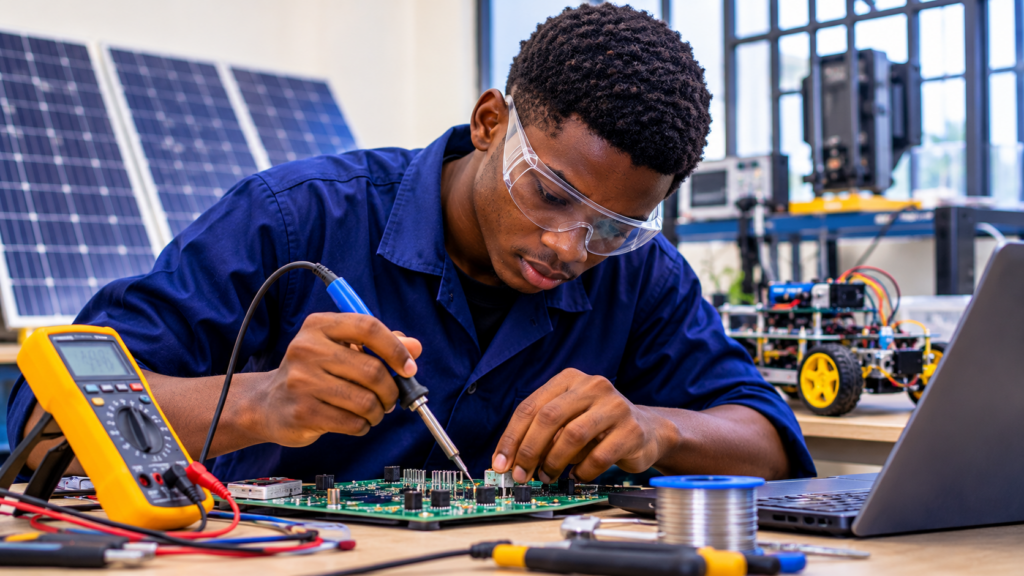
For example, electrical and mechanical engineering students can collaborate to develop affordable solar-powered charging stations, portable lighting systems, and improved battery storage solutions.
A student project could involve designing a solar-powered study lamp that provides reliable lighting during power interruptions.
Another project could explore how to monitor electricity consumption and identify opportunities to reduce energy waste.
These projects may appear simple, but they demonstrate how engineering knowledge can address practical problems.
The bigger opportunity is developing solutions that are affordable, maintainable, and suitable for local conditions.
2. Waste Management: Turning Environmental Problems into Opportunities
Waste management is another area where engineering innovation can make a meaningful difference.
In many communities, poor waste disposal contributes to blocked drainage systems, environmental pollution, and flooding.
Instead of viewing waste purely as something to discard, engineers can explore ways to convert certain waste materials into useful products.
Mechanical and environmental engineering students can investigate waste sorting systems, recycling equipment, and methods of converting suitable organic waste into compost or biogas.
For instance, students could design a simple waste segregation system for campus environments, making it easier to separate recyclable materials from general waste.
Computer and electrical engineering students could also explore sensor-based waste monitoring systems that notify designated personnel when collection containers are full.
Such projects demonstrate that environmental challenges can become opportunities for technological development and entrepreneurship.
3. Smart Agriculture: Can Technology Improve Food Production?
Agriculture is essential to Nigeria’s economy, but farmers continue to face challenges involving irrigation, weather conditions, monitoring, and productivity.
Technology is increasingly providing new ways to address these problems.
One example is smart irrigation. By using soil moisture sensors, microcontrollers, and automated water control systems, engineers can develop solutions that help farmers supply water when crops need it.
Another opportunity involves using drones and digital monitoring systems to observe farmland and identify potential problems.
Students can also explore automated greenhouse systems that monitor temperature, humidity, and soil conditions.
These innovations do not necessarily require expensive industrial equipment to begin. A small prototype developed using affordable electronic components can demonstrate the underlying concept.
The important thing is to understand the problem, test a possible solution, and improve it through experimentation.
4. Artificial Intelligence: A New Opportunity for Engineering Innovation
Artificial intelligence is changing how people work, learn, and solve problems.
For engineering students, AI offers opportunities to improve research, analyse data, develop software, and explore new design possibilities.
However, its value extends beyond using AI to answer academic questions.
Students can explore developing intelligent systems that address local challenges.
For example, a student could develop a basic system that analyses energy consumption patterns, helps monitor equipment performance, or organises information collected during environmental studies.
Computer engineering students may explore machine learning and intelligent applications, while other engineering disciplines can incorporate AI into simulations, monitoring systems, and design processes.
Nevertheless, AI-generated results must be tested and verified. A solution is only useful when it works reliably in the real world.
The goal should not be to use technology simply because it is popular, but to apply it where it provides genuine value.
5. Transportation and Road Safety: Engineering Beyond the Classroom
Traffic congestion, road deterioration, and transportation safety affect everyday movement in many Nigerian cities.
These challenges create opportunities for civil, mechanical, electrical, and computer engineering students.
Civil engineering students can explore road drainage, pavement materials, traffic flow analysis, and improved construction methods.
Electrical and computer engineering students can investigate intelligent traffic monitoring systems, automated road lighting, and sensor-based safety applications.
Mechanical engineering students can explore vehicle efficiency, maintenance technologies, and alternative transportation systems.
Even a small research project analysing traffic patterns around a university environment could provide useful information for future improvements.
The important lesson is that engineering solutions do not always begin with expensive machines or complicated inventions. Sometimes, they begin with careful observation and a well-defined problem.
6. Why Many Student Innovations Never Become Real Solutions
Despite the opportunities available, many student projects end after academic assessment.
A prototype may be developed, demonstrated, and documented, but the idea is rarely tested beyond the requirements of the project.
There are several reasons for this.
First, some students focus more on completing projects for academic grades than understanding the practical problems their projects are intended to solve.
Second, limited access to equipment, funding, mentorship, and technical facilities can make further development difficult.
Third, students sometimes work independently when collaboration across different engineering disciplines could produce better results.
There is also the challenge of commercialisation. A technically successful project does not automatically become a viable product. It must be affordable, reliable, maintainable, and useful to its intended users.
Addressing these challenges requires a stronger culture of practical learning, collaboration, mentorship, and innovation within engineering communities.
7. How NUESA Students Can Start Making a Difference
Innovation does not require waiting until graduation or securing a position in a major engineering company.
Students can begin with manageable steps.
Observe your environment. Pay attention to problems affecting your campus, community, and everyday activities. Identify challenges that could benefit from engineering solutions.
Start with a small project. Rather than attempting to develop a complicated invention immediately, begin with a simple prototype that addresses one specific problem.
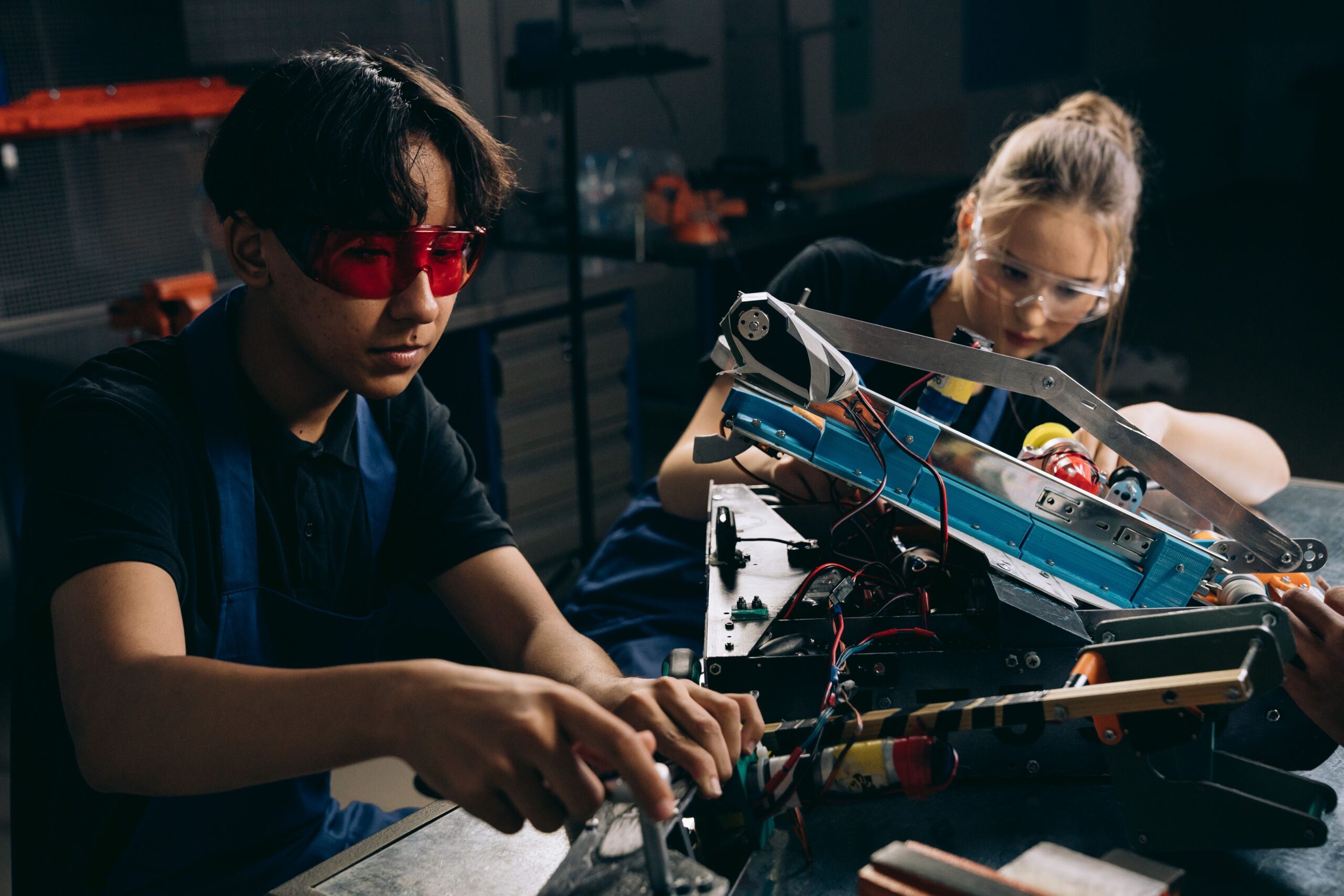
Collaborate across departments. Different engineering disciplines bring different strengths. Working together can produce more complete solutions.
Learn beyond your lectures. Explore technical tutorials, online courses, engineering communities, and practical demonstrations.
Document your work. Take photographs, record your experiments, explain your design process, and share your results. This can help you build a technical portfolio.
Seek feedback. Speak with lecturers, experienced engineers, students, and potential users. Their feedback can help you identify weaknesses and improve your ideas.
Most importantly, do not be discouraged when your first attempt fails. Testing, identifying mistakes, and improving a design are essential parts of engineering.
Conclusion: The Next Innovation Could Come from OAUSTECH
Nigeria’s development requires engineers who can think critically, understand local challenges, and develop solutions that work under real-world conditions.
From renewable energy and agriculture to environmental management and transportation, there are numerous opportunities for engineering students to contribute.
A university should not only be a place where students acquire certificates. It should also be an environment where ideas are tested, innovations are developed, and future professionals learn how to solve problems.
As members of NUESA OAUSTECH, students have an opportunity to become part of this culture of innovation.
You do not need to invent something that changes the entire world tomorrow. Start by solving one problem around you.
That small solution could become the foundation of something much bigger.