8 Technology Trends Every Engineering Student Should Watch
Technology is changing faster than any syllabus can follow. The tools used in industry today may not appear in your textbooks, and the skills employers want keep shifting. You don’t need to master everything, but knowing where engineering is heading helps you choose projects, skills and careers wisely. Here are eight trends worth your attention.
1. Artificial intelligence and machine learning
AI is moving from research labs into everyday engineering work. It helps predict equipment failures, optimise energy use, analyse images, automate design checks and write or debug code. For engineers, the point is not to be replaced by AI but to use it as a tool. Learn the basics of how it works, including data, models and limits, and practise using AI assistants carefully. Always verify their output, because they can sound confident and still be wrong.
2. Renewable energy and solar power
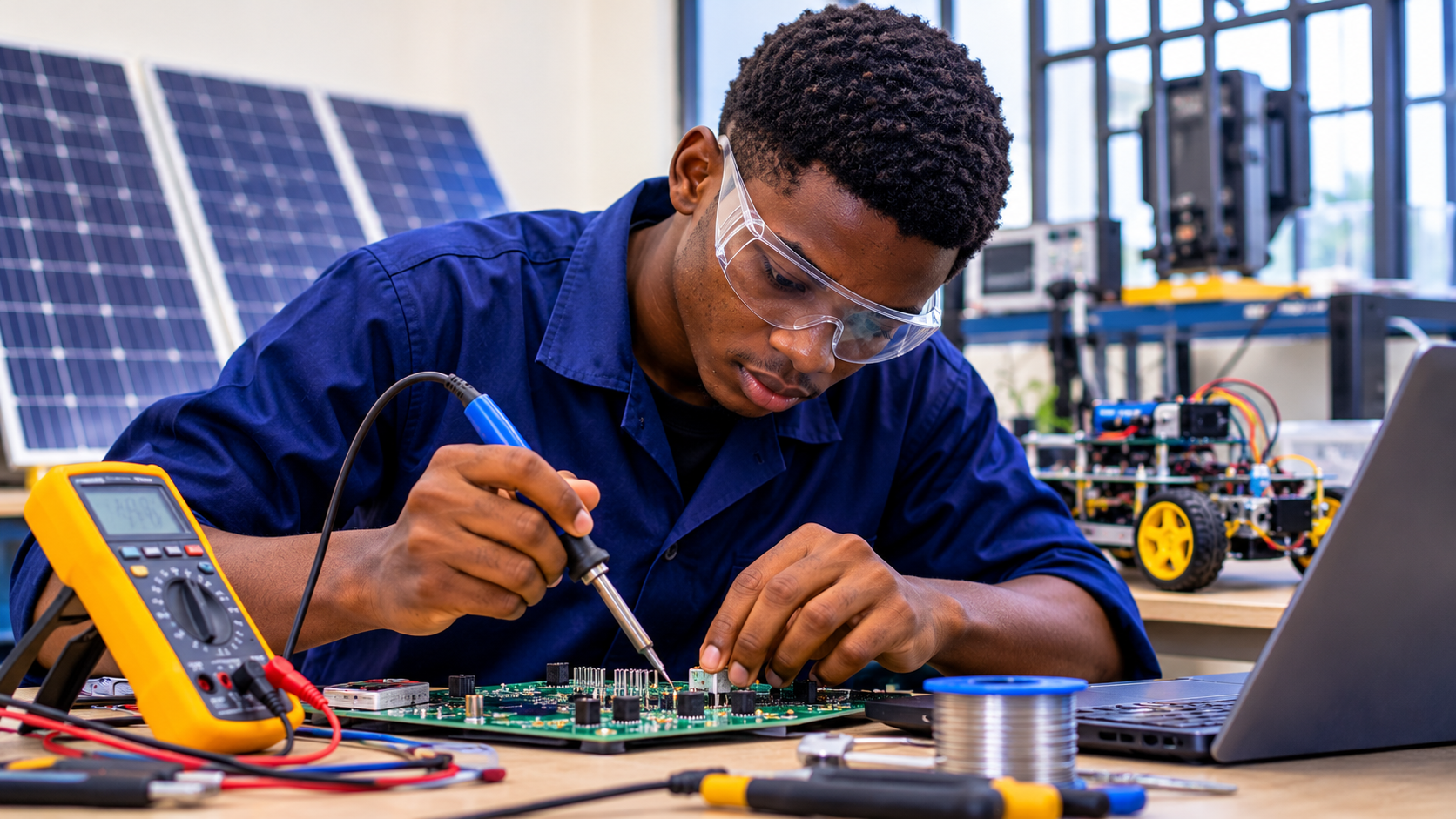
Reliable electricity is a daily challenge for many Nigerian communities, so solar, battery storage and hybrid systems are growing in importance. Skills in power electronics, inverters, energy storage, system sizing and maintenance are increasingly valuable. Electrical, mechanical and even civil students can find opportunities here, from designing installations to managing energy projects.
3. The Internet of Things (IoT)
IoT means everyday devices with sensors and internet connections, such as smart meters, farm monitors, tracking systems and home automation. It combines electronics, programming and networking. A simple project, such as a temperature monitor using a microcontroller, teaches skills you can show employers.
4. Electric and smarter vehicles
Vehicles are becoming more electric, connected and software-driven. Even where adoption is slower, the ideas matter: batteries, motors, charging systems, control electronics and embedded software. Mechanical and electrical students can both find final-year project ideas in this area.
5. Automation, robotics and drones
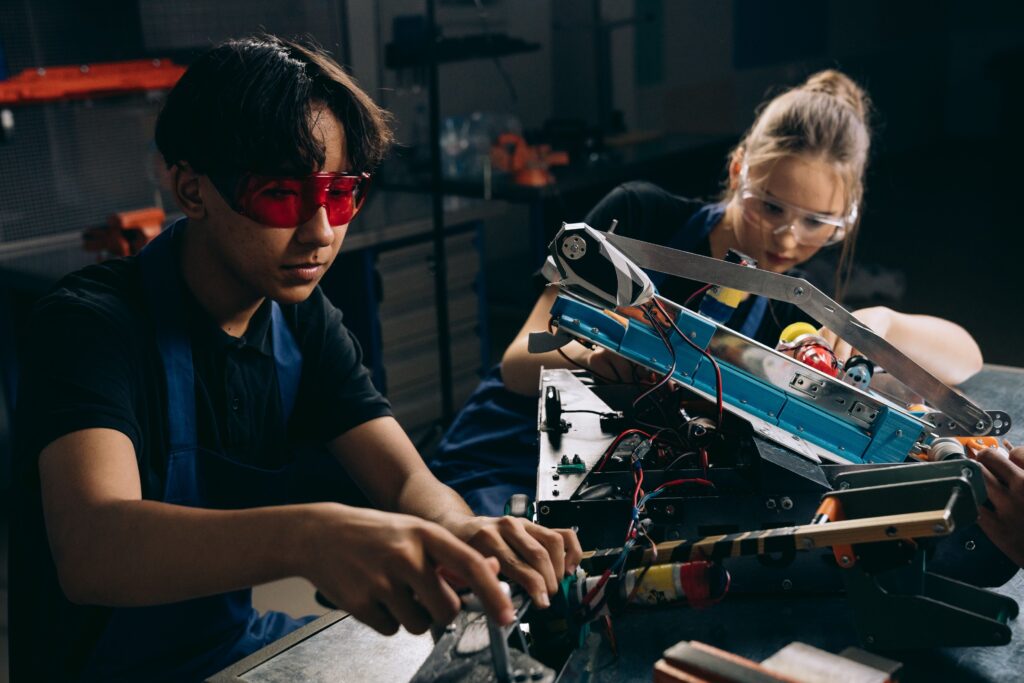
Factories, farms, warehouses and surveying teams are using robots and drones to do repetitive or dangerous work. Understanding sensors, actuators, control systems and programming gives you a strong foundation. Even a small line-following robot or a basic drone project demonstrates teamwork and problem-solving.
6. Digital twins and simulation
Engineers increasingly build virtual models of structures, machines and systems and test them before building the real thing. Software such as MATLAB, AutoCAD and other simulation tools helps reduce cost and risk. If you learn simulation early, you’ll stand out in design and analysis work.
7. Cybersecurity
As more systems go online, from bank apps to power networks and industrial machines, protecting them becomes critical. Engineers need to understand basic security: strong passwords, updates, safe networks and the risks of connecting devices carelessly. Cybersecurity is no longer only for computer science students.
8. 3D printing and rapid prototyping
Designing a part and printing a prototype within hours has changed how products are developed. Students can turn ideas into physical models much faster than before. If your department or a local workshop has access to a printer, try designing something useful, even a small replacement part or enclosure for an electronics project.
How to prepare as a student
- Pick one or two areas that interest you instead of chasing everything.
- Build small projects. A working prototype teaches more than ten articles.
- Learn a programming language. Python is a friendly starting point and useful across fields.
- Use free resources such as online courses, tutorials and documentation.
- Join student communities, including NUESA events, workshops and project teams.
- Document your work on a simple portfolio or on LinkedIn.
- Stay curious and follow reliable technology news.
A word of caution
Not every trend becomes useful, and hype fades quickly. Be careful with online claims of “get rich quick with AI” or expensive courses that promise jobs. Check who made the course, what it teaches and whether it gives you real skills. Strong fundamentals in mathematics, circuits, mechanics and problem-solving remain the foundation of every trend above.
Final word
You don’t have to predict the future perfectly. You only need to keep learning and building. Start with one small project this month, share what you learn, and keep your fundamentals strong. The engineers who succeed are usually those who adapt.
Which of these trends interests you most, and why? Tell us in the comments.