SIWES for Engineering Students: How to Prepare, Get Placed, and Make the Most of It
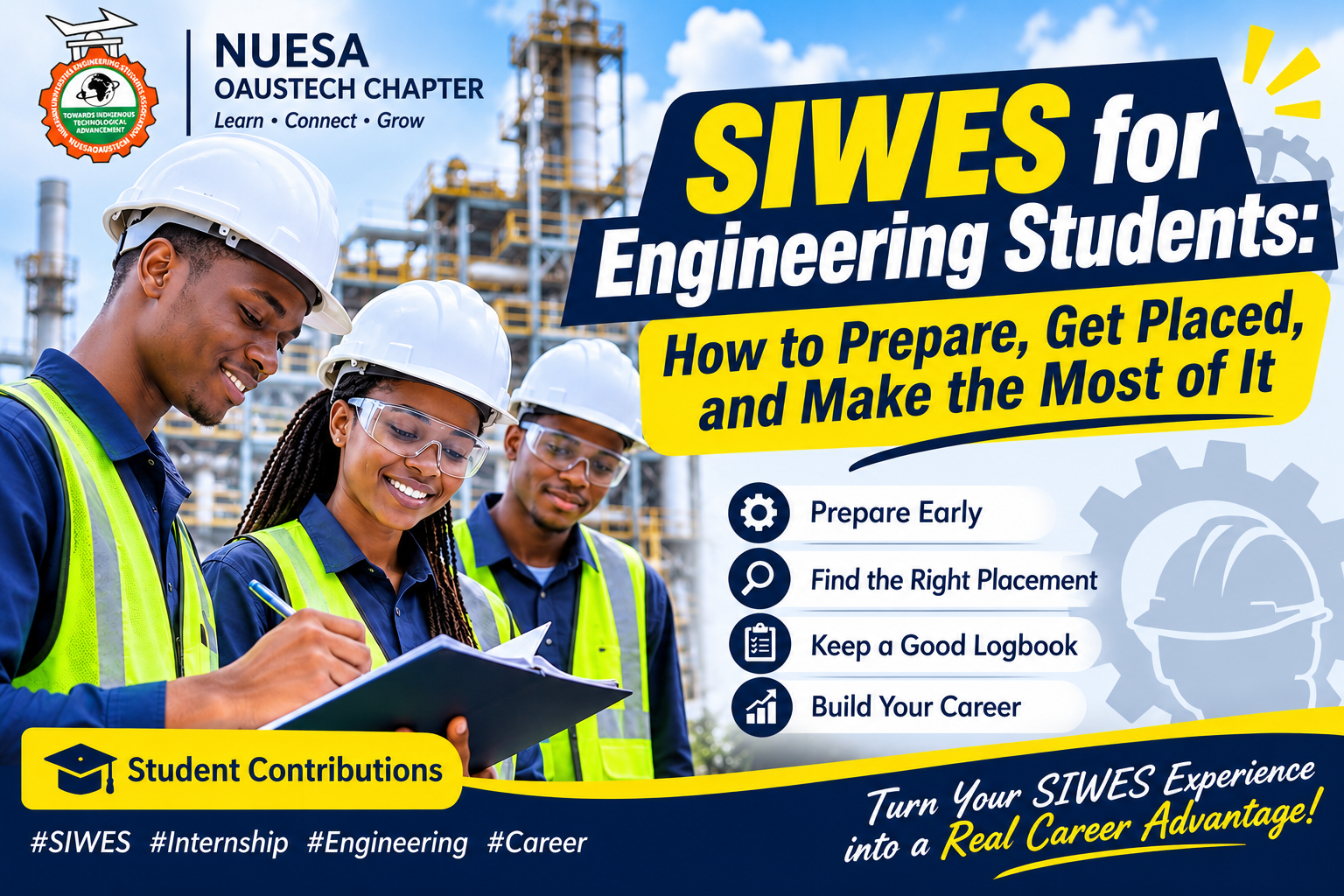
For many engineering students, SIWES (the Students’ Industrial Work Experience Scheme) is the first time classroom theory meets real equipment, real deadlines and real professionals. Done well, it can shape your final-year project, your CV and even your first job. Done carelessly, it becomes a few months of sitting around and a logbook filled in at the last minute.
This guide walks you through what to do before, during and after SIWES so you get the most out of it.
What SIWES is really for
SIWES exists to expose students to the practical side of their course. Lectures teach you why a circuit, a structure or a process works. Industrial training shows you how professionals build, maintain and fix these things under pressure. The duration and requirements depend on your department and institution, so confirm the exact details with your SIWES coordinator early rather than relying on rumours.
Step 1: Start preparing early
Many students begin looking for placement only when the deadline is close, and by then the good spots are gone. Start at least a few months ahead.
- Meet your coordinator. Find out the dates, required documents, and the approved process for placement and supervision.
- Get your documents ready. This usually includes your school’s introduction or acceptance letters, passport photographs and a copy of your ID. Ask your department what applies to you.
Step 2: Choose a placement that fits your course
The best placement is one connected to your field, not just the one closest to your house. A civil engineering student gains more on a construction site than in an unrelated office, and an electrical student learns more at a power or electronics firm than at a general business.
Places to look include construction and engineering firms, manufacturing plants, power and energy companies, telecom and ICT companies, fabrication workshops and government agencies. Ask seniors where they trained and what they learned. A recommendation from someone who has been there is worth more than a random search.
Step 3: Apply professionally
Many companies receive far more applications than they have places. Make yours stand out:
- Address your application to a specific person or department where you can.
- Follow up in person or by phone a week later, politely.
- Apply to several organisations at once, because a single “no” or silence is common.
Dress neatly if you visit in person. First impressions count even for an unpaid trainee.
Step 4: Prepare for your first week
Once you’re placed, treat day one like a job interview that lasts all semester.
- Arrive early and dress according to the workplace rules, including safety gear where required.
- Learn names and who supervises what.
- Ask what is expected of you and who signs your logbook.
- Take safety seriously. Never operate equipment you haven’t been shown how to use.
Step 5: Keep your logbook properly
Your logbook is your proof of learning, and it’s often assessed. Don’t wait until the last week to fill it in.
- Write in it daily or weekly while the details are fresh.
- Describe what you actually did and learned: tools, procedures, problems and how they were solved.
- Add sketches, diagrams or photos where permitted.
- Get your industry-based supervisor to review and sign regularly.
A logbook full of vague lines like “I observed work today” will not impress anyone. Be specific, such as how a fault was traced, how a measurement was taken, or why a method was chosen.
Step 6: Be useful, not just present
Interns who ask good questions and volunteer for tasks learn far more than those who wait to be told. Offer to help with small jobs, take notes in meetings if allowed, and learn the software and equipment the team uses. Be honest about what you don’t know, and listen carefully to correction. Reliability, punctuality and a good attitude are what supervisors remember when someone asks, “Do you know a good student?”
Step 7: Build your network
The people you meet during SIWES can become references, mentors and future employers. Stay polite and professional, exchange contact details where appropriate, and connect with colleagues on LinkedIn. When your training ends, send a short thank-you message to your supervisor. It takes two minutes and leaves a strong impression.
Common mistakes to avoid
- Starting placement search too late
- Choosing a place unrelated to your course
- Missing days without informing your supervisor
- Leaving your logbook until the end
- Ignoring safety rules
- Treating the training as a holiday
After SIWES: turn it into an advantage
When you return to school, convert your experience into value:
- Add the training to your CV, with a line or two on what you did and achieved.
- Write your SIWES report carefully, clearly and in your own words.
- Share what you learned with juniors, such as through a NUESA seminar or blog post.
- Use the experience to choose a final-year project topic or a career direction.
Final word
SIWES is not just a requirement to tick off. It is a chance to test your career choice, learn from professionals, and begin building a reputation before graduation. Start early, choose wisely, document honestly, and behave like the engineer you plan to become.
Have you done SIWES? Tell us in the comments where you trained and one lesson you’d pass on to juniors.